Japan: From Tokyo to Hiroshima
When to go
Late March to May and October to November. The cherry blossom reaches Tokyo and Kyoto around the end of March and the start of April, and the hotels fill and their prices rise; the autumn leaves in Kyoto peak in the second half of November. June to mid-July is the rainy season, August is hot and humid, and from August to October a typhoon can close the expressways and the ferry to Miyajima for a day. Fuji hides in cloud on most summer days and shows best on clear mornings in autumn and winter. Golden Week, at the turn of April and May, is the busiest week of the year on Japanese roads.
The stops
Interactive map of the route on our site ›
- Tokyo3 nights
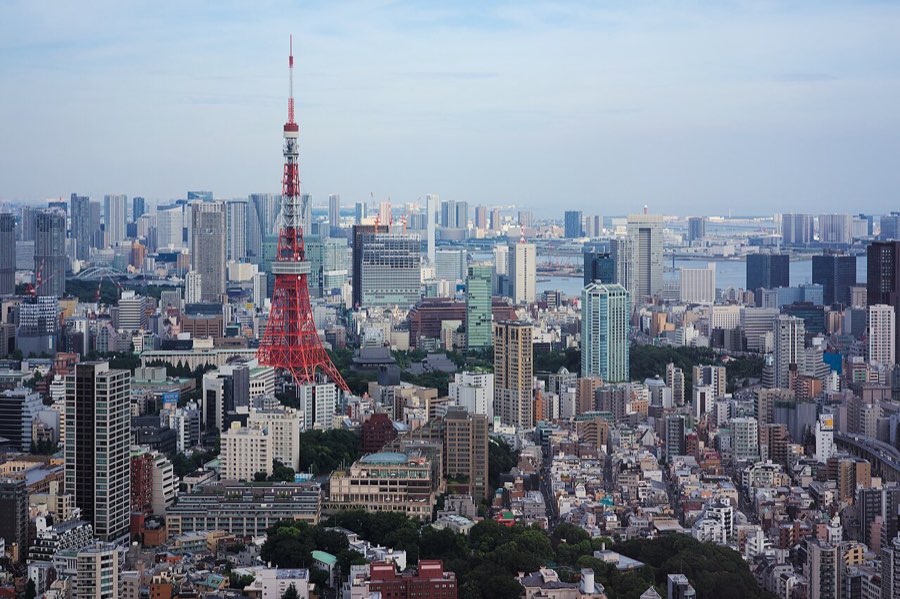
Until 1868 the city was Edo, the seat of the Tokugawa shoguns; that year the emperor moved here from Kyoto and it was renamed Tokyo, the eastern capital. The red-brick building of Tokyo Station opened in 1914 and was restored to its original domes in 2012.
- Kawaguchikoone night
One of the Fuji Five Lakes on the northern foot of the mountain, and the classic view of Fuji across the water. Fuji, 3,776 metres high, last erupted in 1707, and in 2013 it was listed as a World Heritage site as a place of worship and a source of art, not as a natural one.
- Shiraito Fallsstop on the way
A curtain of water some twenty metres high and about 150 metres wide, where snowmelt from Fuji that has seeped through the layers of lava comes out of the cliff in hundreds of thin threads, which is what its name, white threads, means. It is one of the places listed in 2013 as part of the Fuji World Heritage site.
- Fujisan Hongu Sengen Taishastop on the way
The head shrine of the Sengen shrines of Japan, some 1,300 of them, which worship the goddess of Mount Fuji. Its main hall was built in 1604 at the order of Tokugawa Ieyasu, and the shrine owns the summit of Fuji itself, from the eighth station up.
- Kunozan Toshogustop on the way
The shrine where Tokugawa Ieyasu was first buried when he died in 1616, on a hill over the sea, reached on foot by 1,159 stone steps or by a ropeway from the other side of the ridge. Its lacquered main hall, of 1617, was named a National Treasure in 2010.
- Shizuokaone night
Tokugawa Ieyasu, who founded the last shogunate, handed the title to his son in 1605 and retired here, to Sunpu Castle, where he went on ruling from behind the scenes until his death in 1616. Shizuoka Prefecture grows more green tea than any other in Japan.
- Kakegawa Castlestop on the way
A castle on the old Tokaido road, rebuilt at the end of the sixteenth century by Yamauchi Kazutoyo. Its keep fell in an earthquake in 1854, and in 1994 it was rebuilt in wood by the old methods, paid for largely by donations from the people of the town.
- Hamamatsuone night
Tokugawa Ieyasu lived in Hamamatsu Castle for seventeen years from 1570, and so many of the lords who held it later rose to high office that it is called the castle of promotion. The city is the home of Yamaha, which Torakusu Yamaha began here in 1887 by repairing an organ, and of Suzuki.
- Okazaki Castlestop on the way
Tokugawa Ieyasu was born in this castle in 1543; the keep that stands today is a concrete reconstruction of 1959. The town is also known for hatcho miso, a dark soybean paste that has been made here, a few streets from the castle, for centuries.
- Nagoyaone night
Built from 1610 on the orders of Tokugawa Ieyasu, with a pair of golden carp-tigers, the shachihoko, on the roof of the keep. The castle burned in an American air raid in May 1945; the keep was rebuilt in concrete in 1959 and has been closed since 2018 for a reconstruction in wood, but the Honmaru Palace beside it, rebuilt by hand in the old way, is open.
- Hikone Castlestop on the way
A castle on the shore of Lake Biwa, the largest lake in Japan. Its keep, finished in 1607, is one of only twelve in the country that survive from the age of the castles, and one of five listed as National Treasures.
- Kyoto3 nights
The capital of Japan from 794 to 1868, with seventeen temples, shrines and a castle listed together as a World Heritage site. It was on the list of targets for the atomic bomb in 1945, and the American secretary of war, Henry Stimson, had it taken off.
- Narastop on the way
The capital before Kyoto, from 710 to 784. In Todai-ji sits a bronze Buddha some fifteen metres high, consecrated in 752, inside one of the largest wooden buildings in the world. The deer in the park are held to be messengers of the gods and walk free; they bow for the crackers sold to feed them, and they bite.
- Osakaone night
Osaka Castle was begun in 1583 by Toyotomi Hideyoshi, who unified Japan; the keep that stands today was rebuilt in concrete in 1931. The city calls itself the kitchen of Japan, and around the canal of Dotonbori the saying is kuidaore, to eat until you drop.
- Kobestop on the way
In 1940 and 1941 thousands of Jewish refugees who had fled to Lithuania, most of them from Poland, holding the transit visas written by the Japanese consul Chiune Sugihara, crossed Siberia and reached Kobe, where the small Jewish community of the port took them in. The community’s synagogue, Ohel Shelomo, stands in the old foreign quarter of Kitano.
- Himejione night
The White Heron Castle, whose main keep was finished in 1609 and has never been destroyed by war or fire, though the city around it burned in the air raids of 1945. In 1993 it became one of the first two places in Japan listed as World Heritage sites.
- Korakuen, Okayamastop on the way
Counted with Kenroku-en in Kanazawa and Kairaku-en in Mito among the three great gardens of Japan, laid out for the lord Ikeda Tsunamasa and finished in 1700. Across the river stands Okayama Castle, painted black and called the Crow Castle.
- Kurashikione night
A rice merchants’ town of white-walled storehouses along a willow-lined canal, ruled directly by the shogun in the Edo period. The Ohara Museum of Art on the canal, opened in 1930 by the textile magnate Ohara Magosaburo, was the first museum of Western art in Japan, and El Greco’s Annunciation hangs there.
- Onomichistop on the way
A port town on a hillside over the Inland Sea, with a walk that links some twenty-five old temples. It is the start of the Shimanami Kaido, the chain of bridges over the islands to Shikoku opened in 1999, which has a cycle lane of about seventy kilometres the whole way.
- Hiroshima2 nights
At 8:15 on the morning of 6 August 1945 the first atomic bomb used in war exploded over the city. The ruin at the edge of the Peace Park, the Atomic Bomb Dome, was the prefecture’s exhibition hall, designed by the Czech architect Jan Letzel; it stood almost under the blast and was left as it was.
- Miyajimastop on the way
The island of the Itsukushima Shrine, whose great red torii stands in the sea and is not sunk into the seabed but held up by its own weight. Leave the car at Miyajimaguchi and take the ferry, about ten minutes; at high tide the shrine seems to float, and at low tide you can walk out to the gate.

What it costs
Eighty dollars a night is the room. The car, the fuel and the tolls are yours, and in Japan the tolls are the big item: on a long day on the expressway they can cost more than the fuel. Some rental companies offer foreign visitors the Japan Expressway Pass, a fixed price for a set number of days on most of the expressways outside the city networks; work out whether it pays for your days on the road. Parking in the cities is paid by the hour and is expensive, and most hotels charge for parking by the night. The rental company charges a fee for returning the car in Hiroshima rather than where you took it.
What to know
Four things. One: the licence. An Israeli licence alone is not valid in Japan; you need an International Driving Permit of the 1949 Geneva type, which is the kind issued in Israel and which Japan accepts, with your Israeli licence and passport beside it. Without it the rental company will not hand over the car. Two: Japan drives on the left, with the steering wheel on the right; the first hour is the hard one, and the indicator and the wipers are often on the opposite stalks. Three: the tolls. Rent an ETC card with the car and drive through the purple ETC lanes without stopping; without one, take the lanes marked for general traffic and pay at the booth. Four: alcohol. Japan has no tolerance for drinking and driving — not one beer — and the passengers who ride with a driver who has been drinking, and whoever served the drink, can be punished too.
Roads, tolls and rules
Japan drives on the left. Do not drive in Tokyo: spend the first days on the trains, collect the car on the morning you leave, and return it at the end before you head into central Hiroshima, or park it at the hotel and leave it, because parking in the cities is scarce and the streets are narrow. The route goes slowly on purpose: no driving day is longer than about 160 kilometres, with a night by Fuji, in Shizuoka, Hamamatsu and Nagoya on the way to Kyoto, and in Himeji and Kurashiki on the way to Hiroshima. The expressways are excellent and the speed limit on most of them is a hundred kilometres an hour.

Travel Japan: From Tokyo to Hiroshima
The route on our site, with a room up to $80 every night.