Bulgaria: Sofia, Rila and Plovdiv
When to go
May, June, September and October. In July and August Plovdiv and the Thracian plain pass thirty-five degrees, and the road to Rila is full of summer pilgrims. In winter the monastery stands in snow and the mountain road to it can be icy, and the passes on the way to Koprivshtitsa need winter tyres.
The stops
Interactive map of the route on our site ›
- Sofia2 nights
In March 1943 the deportation of Bulgaria’s Jews was stopped after a protest led by the deputy speaker of parliament, Dimitar Peshev, and by the bishops of the Orthodox Church, and the Jews of Bulgaria itself survived the war; the more than eleven thousand Jews of the Thrace and Macedonia lands then under Bulgarian rule were deported to Treblinka. The Sofia Synagogue, opened in 1909, is the largest Sephardic synagogue in Europe and still holds services.
- Boyana Churchstop on the way
A small church at the foot of Mount Vitosha, on the edge of Sofia, painted in 1259 with frescoes that are among the finest of medieval Europe, a World Heritage site since 1979. On its walls are portraits of the donors, the sebastokrator Kaloyan and his wife Desislava; visitors go in a few at a time, for a few minutes.
- Stob Pyramidsstop on the way
Pillars of red and yellow earth up to about twelve metres high on the slope above the village of Stob, carved by rain out of soft sediment. Many still carry a stone on top, which shields the column beneath it from the rain; when the stone falls, the pillar wears away.
- Rila Monasteryone night
The largest monastery in Bulgaria, founded in the tenth century by the hermit John of Rila, a World Heritage site since 1983. Most of it was rebuilt after a fire in 1833; the stone tower of Hrelyo, from 1335, is the one building that survived.
- Sapareva Banyastop on the way
In a park in the middle of the town a geyser throws up mineral water at about 103 degrees, the hottest spring in Bulgaria. Its water fills the town’s outdoor pools, and the fountain steams even in summer.
- Samokovone night
A mountain town at the foot of Rila that gave its name to the Samokov school of icon painters and woodcarvers of the nineteenth century. Zahari Zograf, the most celebrated of them, was born here in 1810 and painted the frescoes of the main church of Rila Monastery and of Bachkovo.
- Tsarska Bistritsastop on the way
A hunting lodge in the pine forest above Borovets, built from 1898 for Prince Ferdinand of Bulgaria. Borovets, then called Chamkoria, grew around it into the first mountain resort in the country, and the royal family came here every summer until the monarchy was abolished in 1946.
- Plovdiv3 nights
One of the oldest continuously inhabited cities in Europe, built on hills over the Maritsa; its Roman theatre lay buried for centuries, was uncovered only in the twentieth century, and holds concerts again. In March 1943 Metropolitan Kiril of Plovdiv came to the school where the city’s Jews had been gathered for deportation and stood by them until they were let go; the Zion synagogue, hidden in a courtyard of the old Jewish quarter, still stands.
- Asen’s Fortressstop on the way
A medieval fortress on a cliff above the gorge of the Asenitsa, south of Asenovgrad. It is named after Tsar Ivan Asen II, who rebuilt it in the thirteenth century, as an inscription records; of the castle, only the church of the Holy Mother of God still stands whole.
- Bachkovo Monasterystop on the way
The second largest monastery in Bulgaria, founded in 1083 by two Georgian brothers in Byzantine service, Grigorios and Abasios Pakourianos, who wrote its charter in Greek, Georgian and Armenian. Its ossuary, painted in the twelfth century, is one of the oldest surviving parts.
- Hisaryastop on the way
A spa town inside the walls of Diocletianopolis, the Roman city that grew up around its springs, and the walls still stand to about ten metres in places. The south gate is called Kamilite, the camels, because its broken double arch looks like two humps.
- Staroselstop on the way
A Thracian temple built inside a burial mound near the village of Starosel and uncovered in 2000 by the archaeologist Georgi Kitov; it is the largest Thracian cult complex found in Bulgaria. A stone staircase leads up through a curved wall to a round hall at the heart of the mound.
- Koprivshtitsaone night
A mountain town of painted wooden houses from the Bulgarian National Revival. The April Uprising against the Ottomans broke out here in 1876, and the small stone bridge where the first shot was fired is still called the Bridge of the First Rifle Shot.
- Sofiaone night
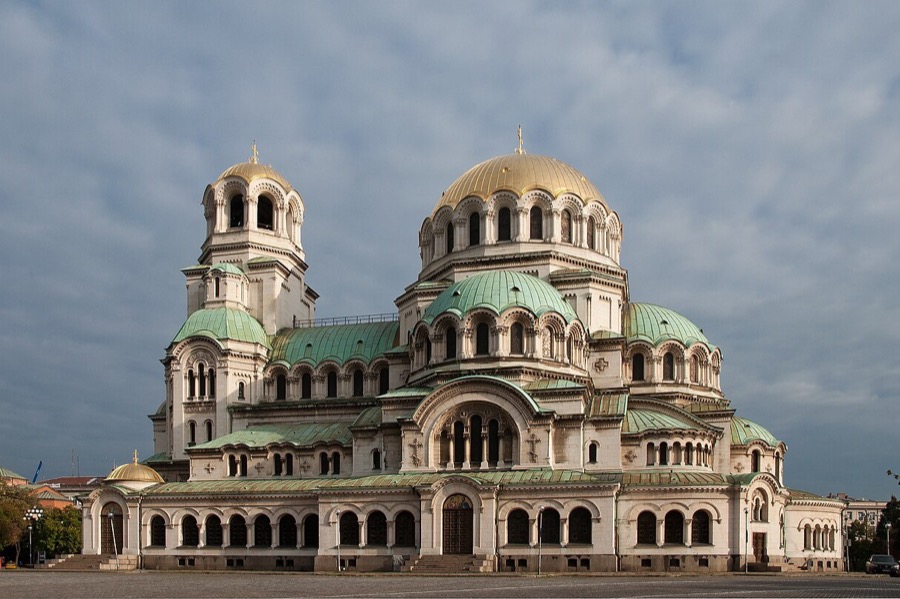
Back to the capital for a last night. The Alexander Nevsky Cathedral, built between 1882 and 1912, was raised in memory of the Russian soldiers who fell in the war of 1877–78 that freed Bulgaria from Ottoman rule.

What it costs
Eighty dollars a night is the room. The car, the fuel and the road charges are yours: Bulgaria has no toll booths on this route, but every car on its motorways and main roads needs the electronic vignette, which a Bulgarian rental car normally already has. Parking in the centres of Sofia and Plovdiv is paid by zone, usually by text message or at a machine. Entrance to the monasteries is free; the museums and Boyana Church charge at the door.
What to know
Three things. One: the e-vignette. Since 2019 Bulgaria has had no sticker; the vignette is electronic, tied to the number plate, and cameras on the road check it. Ask the rental company to confirm the car has one valid for your dates; if you bring a car from abroad, buy it before you cross, online or at the border. Two: the old town of Plovdiv. Its hill is cobbled, steep and largely closed to traffic; leave the car in the paid zone below and walk up. Three: the mountain roads. The last stretch to Rila Monastery and the roads over the Sredna Gora to Koprivshtitsa are narrow and winding, with trucks and livestock; and Sofia itself is jammed at rush hour, so leave the city early.
Roads, tolls and rules
Bulgaria drives on the right. The Trakia motorway joins Sofia and Plovdiv in about two hours; everything else on this route is two-lane road through villages and over the hills. Road signs are in Cyrillic, and on main roads also in Latin letters. Rental cars are mostly manual; automatics must be booked ahead. The route is a loop from Sofia and back. The road to Rila Monastery ends at the monastery, so the night there and the night in Samokov carry the drive across the mountains to Plovdiv, and no day is longer than about 140 kilometres.

Travel Bulgaria: Sofia, Rila and Plovdiv
The route on our site, with a room up to $80 every night.