The Rhine Valley by train: Cologne to Frankfurt
When to go
April to October is the season: the KD Rhine boats sail the valley, the vineyards are green and then golden, and in September and October the wine villages hold their wine festivals. On several summer evenings the Rhine in Flames fireworks light up the castles in turn, from Rüdesheim to Koblenz; check the dates for your year, because on those nights every room in town is gone. In winter the boats mostly stop, the castles shorten their hours, but the trains run as always, and from late November the Christmas markets of Cologne and Frankfurt open. Avoid the weeks of the big trade fairs in Cologne and Frankfurt, when hotel prices there climb steeply.
The stops
Interactive map of the route on our site ›
- Cologneone night
The cathedral stands beside the main station: begun in 1248 and finished only in 1880. A decree of Emperor Constantine from 321 mentions the Jews of Cologne, the oldest written record of a Jewish community north of the Alps.
- Bonnstop on the way
Beethoven was born here in 1770, in the house in Bonngasse that is now the Beethoven-Haus museum, a short walk from the station. From 1949 to 1990 Bonn was the capital of West Germany.
- Koblenzone night
The Deutsches Eck is the point where the Moselle flows into the Rhine. The equestrian statue of Kaiser Wilhelm I there was shot down in 1945 and replaced by a copy in 1993.
- Ehrenbreitsteinstop on the way
A cable car built for the federal garden show of 2011 crosses the Rhine from beside the Deutsches Eck to the Ehrenbreitstein fortress, rebuilt by the Prussians in the 1810s and 1820s high above the river.
- Boppardstop on the way
In the middle of the town stand long stretches of the walls of the Roman fort of Bodobrica, built in the 4th century, among the best preserved in Germany.
- St. Goarstop on the way
Above the station rise the ruins of Rheinfels, once one of the largest castles on the Rhine, blown up by the French in 1797.
- Loreleystop on the way
Seen from the train across the river: a slate rock about 130 metres above the narrowest bend of the Rhine. Heinrich Heine’s poem of 1824 about the maiden who lures boatmen to their death, set to music by Friedrich Silcher, made it famous.
- Oberweselstop on the way
A town of towers: most of its medieval wall still stands along the river, with many of its towers, right beside the railway.
- Pfalzgrafensteinstop on the way
On an island in the river off Kaub stands a white toll castle from the 14th century, built to stop the ships and collect the Rhine toll; the train passes in sight of it.
- Bacharachone night
A wine town of half-timbered houses under Stahleck castle. The ruined Gothic Wernerkapelle above it is tied to the blood libel of 1287 over the death of a boy, Werner, which set off killings of Jews along the Rhine; Heine set his unfinished story The Rabbi of Bacharach here.
- Ruedesheimone night
From Bacharach the train runs to Bingen and the ferry crosses to Rüdesheim in minutes. A cable car climbs over the vineyards to the Niederwald monument, built from 1877 to 1883 to mark the founding of the German Empire, with the figure of Germania facing the river.
- KD Rhine boat to the Loreleystop on the way
In season the KD boats sail from Rüdesheim down the gorge past the castles to St. Goarshausen, under the Loreley, in a few hours; the right-bank train brings you back in about an hour.
- Mainzstop on the way
Johannes Gutenberg printed here, and the Gutenberg Museum near the cathedral keeps copies of his Bible. Mainz is one of the three ShUM cities, with Speyer and Worms, the cradle of Ashkenazi Jewry, a World Heritage site since 2021; its old Jewish cemetery is among the oldest in Europe.
- Frankfurtone night
The Römerberg is the old square of the city hall, rebuilt after the bombing of 1944. Anne Frank was born in Frankfurt in 1929, and the Museum Judengasse shows the foundations of the Jewish street of the Middle Ages.

What it costs
Eighty dollars a night is the room. The train tickets are yours and are not included. Every leg of this route can be done on regional trains (RE and RB), which the Deutschlandticket covers: a monthly subscription for all regional trains and local transport in Germany, sold by DB as a digital ticket; check DB for the current price and how to cancel it. It does not cover the fast IC and ICE trains, the KD Rhine boats, the Rhine ferry or the cable cars, which charge their own fares. Without it, buy point-to-point tickets from DB.
What to know
Three things. One: no reservations. The regional trains have no seat reservations; you just get on, and on summer weekends the Rhine trains are full, so travel in the morning. Two: the sides of the river. The left-bank line from Koblenz to Bingen runs on the west bank and the right-bank line on the east; there are no bridges between Koblenz and Mainz, so you cross by the small car ferries, and the boat between Bingen and Rüdesheim takes a few minutes. Sit on the river side of the train. Three: the luggage. Small stations like Bacharach have few staff and sometimes stairs, so travel light; DB offers a door-to-door luggage service booked days ahead — check DB.
Roads, tolls and rules
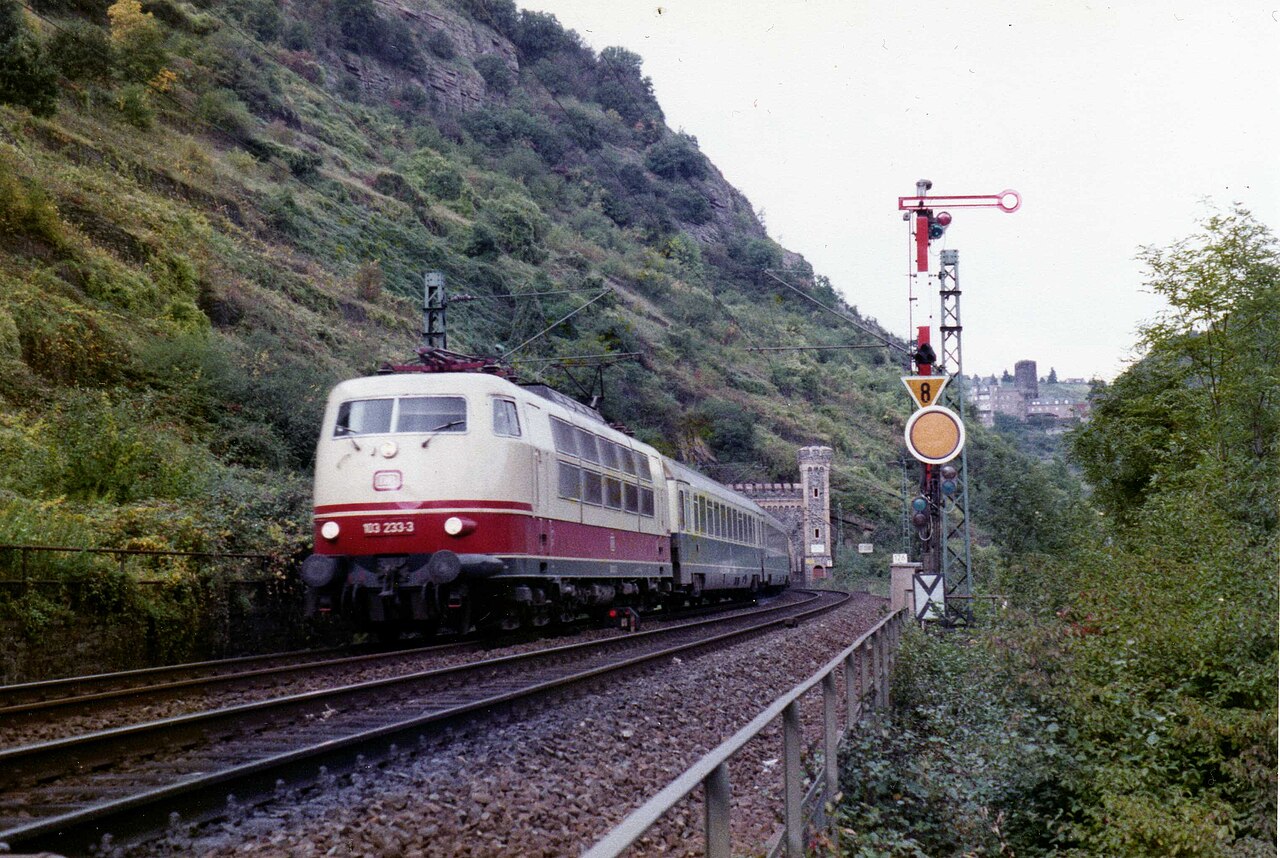
This route has no car. It follows the Rhine upstream, south from Cologne past Bonn to Koblenz, then along the left-bank line through the Upper Middle Rhine Valley, a World Heritage site since 2002, with a castle on almost every bend. From Bacharach you cross to Rüdesheim, take a KD boat back down the gorge under the Loreley, and end via Mainz in Frankfurt. The legs are short — rarely more than an hour on the train — so the days are for the towns and the river. Be honest about the rooms: Bacharach and Rüdesheim are small wine towns of guesthouses, rooms at eighty dollars exist but go early on summer weekends, and when none is free the site offers two flats at that price instead.

Travel The Rhine Valley by train: Cologne to Frankfurt
The route on our site, with a room up to $80 every night.