Larache: what to see, where to stay and how to get around
Greek and Roman writers placed the Garden of the Hesperides, with its golden apples guarded by a dragon, at the mouth of a river on the Atlantic — and many of them meant this one. On a hill above the Loukkos stood Lixus, one of the oldest towns in Morocco, first Phoenician and then Roman. This short drive and walk goes from the ruins down to the river mouth and back into the modern town. About three hours; the site is a rough hillside, so wear proper shoes.

A short history of Larache
A little north of the town lie the ruins of Lixus, one of the earliest Phoenician settlements in Morocco, which the Greeks linked to Hercules and the Garden of the Hesperides. Larache itself grew up as a port at the mouth of the Loukkos River. In 1610 the ruler al-Mamun handed it over to the Spanish, who held it until 1689, when Moulay Ismail captured it. In 1911 Spanish troops landed here again, and the town was part of the Spanish protectorate until 1956, which is why the main square and the buildings around it look Spanish. The French writer Jean Genet chose to be buried in its small cemetery, and was buried there in 1986.
The ten best sights in Larache
-
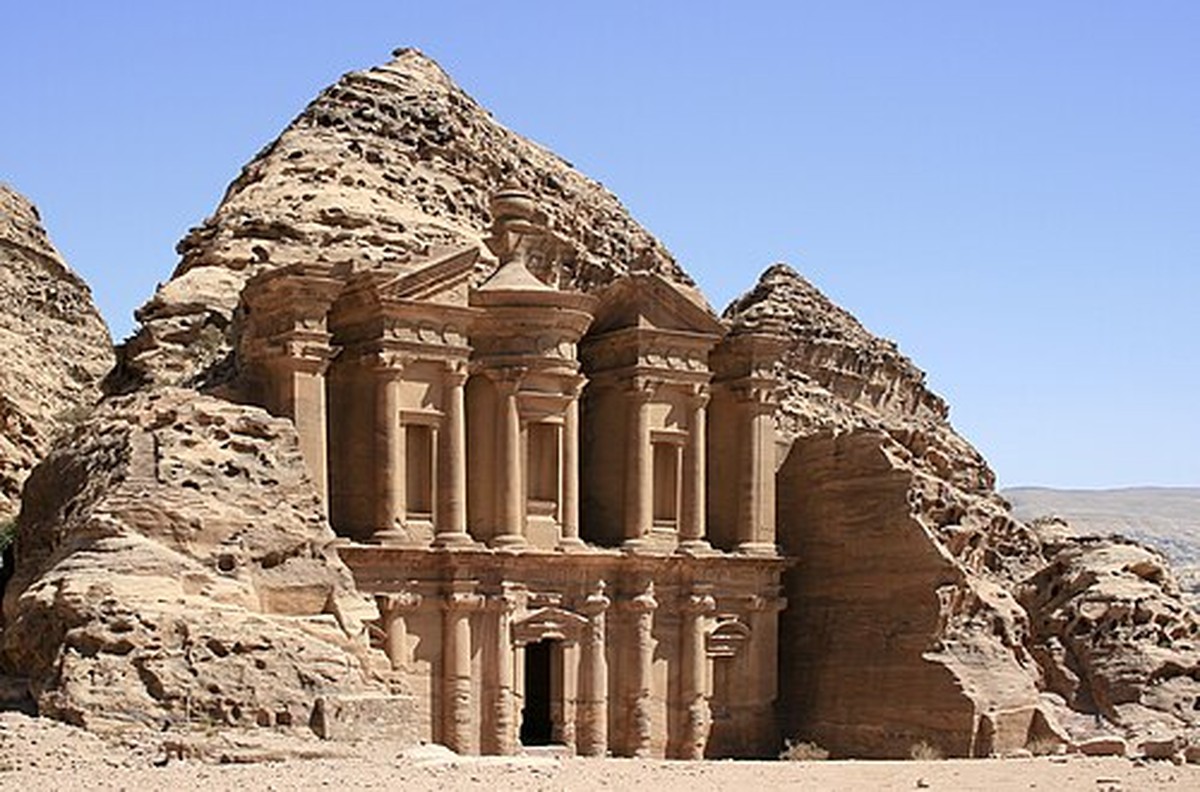
1Lixus
Phoenician and Roman ruins on a hill over the river; bring water, there is little shade
 2Christian Cemetery
Above the ocean at the edge of town; Jean Genet is buried here
-
3Kebibat Fortress
Old fort at the medina's edge; best seen from the corniche
 4Tour de la Cigogne
The fortress over the river mouth; storks nest on the walls
 5Mzoura stone circle
A prehistoric ring of standing stones in the fields; ask in the village for the track
 6Palais Raissouni, Asilah
The bandit-lord's palace on Asilah's sea wall
 7Place de la Libération
The Spanish-era oval square; the cafés here are the town's living room
-
8Balcón Atlántico
Clifftop promenade for the sunset over the ocean
-
9Ras R'mel beach
The town beach across the Loukkos mouth; strong currents, swim where locals swim
-
10Asilah medina
White-and-blue walled town with murals, 40 minutes north
Scan with your phone camera to open the map there
What is an audio walk?
Tours in Larache →A guide in your headphones: open the walk on our site, walk from stop to stop, and at each one your phone tells its story. No guide, no group, and free. This is the first walk in Larache:
Free walking tours in Larache
Hesperides on the Loukkos
Greek and Roman writers placed the Garden of the Hesperides, with its golden apples guarded by a dragon, at the mouth of a river on the Atlantic — and many of them meant this one. On a hill above the Loukkos stood Lixus, one of the oldest towns in Morocco, first Phoenician and then Roman. This short drive and walk goes from the ruins down to the river mouth and back into the modern town. About three hours; the site is a rough hillside, so wear proper shoes.
- Lixus · Pliny the Elder wrote that Lixus was where the palace of Antaeus stood and where Hercules fought him; the town was also linked with the Garden of the Hesperides. The site was settled by Phoenicians from about the 8th century BC.
- Lixus fish-salting factory · The rows of stone vats at the foot of the hill were used to salt fish and make garum, the fermented fish sauce Romans poured on almost everything. It was one of the largest such factories in the western Roman world.
- Lixus amphitheatre · The small round arena on the slope is unusual: it combined a theatre with an amphitheatre for games, and is thought to be the only Roman amphitheatre known in Morocco.
- Ras R'mel beach · The beach lies on the far side of the Loukkos mouth from the town. The river's sandbar made Larache a tricky harbour, and ships waited outside for the tide.
- Tour de la Cigogne · Larache was held by Spain from 1610 until Moulay Ismail took it back in 1689. The forts around the medina date from these centuries of fighting over the river mouth.
- Place de la Libération · Under the Spanish protectorate, from 1912 to 1956, this was the Plaza de España, built as the centre of the new town. The Spanish-language signs on the cafés around it are a leftover of those years.
Writers by the ocean
Larache has drawn writers who wanted to live, and be buried, far from Europe's literary capitals. This walk follows the Spanish town along the cliff to the cemetery above the ocean, with the medina and its market on the way back. It is short — about an hour and a half — and best in the late afternoon, ending on the clifftop for sunset. The cemetery is often locked; the keeper lives nearby and opens it for a small tip.
- Place de la Libération · The oval plaza with its fountain and arcades was laid out by the Spanish as the hinge between their new town and the old medina, whose gate opens straight off it.
- Medina souk · The arcaded market square inside the gate was built in the Spanish period of the 17th century, when Larache was a Spanish fortress town. It still holds the stalls of the old town's daily trade.
- Kebibat Fortress · The fort stands on the cliff at the north end of the medina, looking straight out to the Atlantic. Its guns covered the approach to the river mouth.
- Balcón Atlántico · The promenade runs along the cliff edge over the ocean. Fishermen work the rocks below, and in the evening half the town walks here.
- Christian Cemetery · The French writer Jean Genet died in 1986 and asked to be buried in Larache, where he had spent long periods. His grave faces the sea; in 2017 the Spanish novelist Juan Goytisolo was buried beside him.
- Fish market · Larache is a working fishing port, and the morning catch is sold in the hall by the harbour. Sardines are the cheapest fish on the Moroccan Atlantic coast, often sold by the kilo.
Asilah and the battlefield
North and inland of Larache are two places that shaped Portugal as much as Morocco. Asilah was a Portuguese stronghold for about eighty years, and near Ksar El Kebir the young Portuguese king Sebastian lost his life and his army in 1578. A day loop by car: up the coast to Asilah in the morning, inland past a prehistoric stone circle, and back via Ksar El Kebir. About 150 km in total on good roads; Asilah gets crowded with Moroccan holidaymakers in August.
- Asilah medina · Since 1978 Asilah has held an arts festival each summer, and artists paint murals on the medina walls, repainted every year. The walls themselves were built by the Portuguese after they took the town in 1471.
- Palais Raissouni, Asilah · Mulai Ahmed er-Raisuni, bandit and local ruler, built this palace in the early 20th century. In 1904 he kidnapped the American Ion Perdicaris near Tangier, a crisis that brought US warships to Morocco.
- Borj Al Kasabah, Asilah · The bastion at the corner of the walls looks over the ocean and the small graves of the Muslim cemetery on the sea edge. It is the classic sunset spot of the town.
- Mzoura stone circle · Mzoura is an ellipse of about 170 standing stones around a burial mound, unique in North Africa. Local legend makes it the tomb of the giant Antaeus whom Hercules killed.
- Ksar El Kebir · On 4 August 1578 the Battle of the Three Kings was fought near here: King Sebastian of Portugal, the sultan Abd al-Malik and the deposed sultan al-Mutawakkil all died. Sebastian left no heir, and Portugal passed to the Spanish crown two years later.
- Ksar El Kebir Station · The town grew as the market of the fertile Loukkos plain, and the railway that passes through links it to Tangier and Fès. From here the drive back to Larache is about half an hour.
Getting to Larache and getting around
- Gare Routière de Larache · On the edge of town; take a petit taxi to the centre
- Ksar El Kebir Station · Nearest train station, half an hour inland, on the Tangier–Fès line
- Asilah Station · Trains to Tangier and Rabat; handy for a passenger joining on the coast
Cheap eats in Larache
Larache eats from the sea. Sardines, sole, squid and shrimp come in every morning and end up grilled, fried or in a tagine with tomatoes and peppers. The Spanish years left churros, tapas-style plates and coffee with milk in a glass. Prices are those of a working town, well below the beach resorts to the north.
- Fish market grills · Choose fish, have it grilled, about 40-70 dirhams a plate
- Café España · Coffee and churros-style pastries on the plaza, about 10-20 dirhams
- Balcón Atlántico café · Mint tea over the ocean, about 10-15 dirhams
- Snack El Patron · Sandwiches, pizza and shawarma by the plaza, about 25-50 dirhams
- Tutti Frutti · Juices and quick local dishes, about 15-40 dirhams
- Rabah bakery · Bread and pastries for the road, a few dirhams each
Museums in Larache
- Lixus · Phoenician and Roman city on its hill; an hour or two
- Christian Cemetery · Jean Genet's grave above the ocean
- Kebibat Fortress · Old fort on the cliff at the medina's end
- Palais Raissouni, Asilah · Used for exhibitions in the summer arts festival
- Mzoura stone circle · Standing stones in the fields; free, no facilities
Nature and day trips near Larache
- Merja Zerga · Lagoon birdwatching by boat, best in winter
- Ras R'mel beach · Long sandy beach across the river mouth
- Balcón Atlántico · Clifftop sunset over the Atlantic
- Plage de Sidi Mghait · Wild beach on the way to Asilah, with a small shrine
- Oued El Makhazine reservoir · Reservoir in the hills on the river of the 1578 battle
Things to do in Larache with kids
- Jardin des Lions · Small garden by the plaza for a run-around
- Tour de la Cigogne · Count the stork nests on the walls
- Ras R'mel beach · Sand and shallow edges; watch the current
- Merja Zerga boat trip · Flamingos from a rowing boat
- Asilah murals · Hunt for the painted walls in the white lanes
Where to eat in Larache
- Restaurant del Sol · Regional and seafood plates on the plaza
- Miramar · Fish dinner near the medina
- Restaurant Jean Genet · Dinner by the medina, named after the town's famous resident
- Chez Jawad · Simple Moroccan and fish dishes
- Loukos · Restaurant named for the river below
- San Francisco · Casual dinner in the new town

Frequently asked questions about Larache
What is there to see in Larache?
The top sights in Larache are Lixus, Christian Cemetery and Kebibat Fortress. The full list on this page has 10 sights, each with a photo and a short note.
How many days do you need in Larache?
Three to four days are enough to see the best of Larache without rushing, including at least one walking tour.
Is there a free walking tour in Larache?
Yes. sleepntrip has 3 free audio walks in Larache, with no guide and no group: your phone tells the story at every stop. The first one: Hesperides on the Loukkos.
How do you get to Larache and get around?
The main ways are Gare Routière de Larache, Ksar El Kebir Station and Asilah Station. Full details are in the transport section on this page.
Where to stay in Larache, and for how much?
sleepntrip shows only rooms in Larache that meet nine conditions: a good location, high guest scores, cleanliness, and a price of up to $80 a night for two. Pick your dates and see what is free.
Looking for a hotel in Larache for your dates?
Only rooms that meet nine conditions, up to $80 a night.